Since it’s the season for telling ghost stories, I thought it would be appropriate for my first Halloween post to be about a ghost.
A real ghost.
A crab ghost.
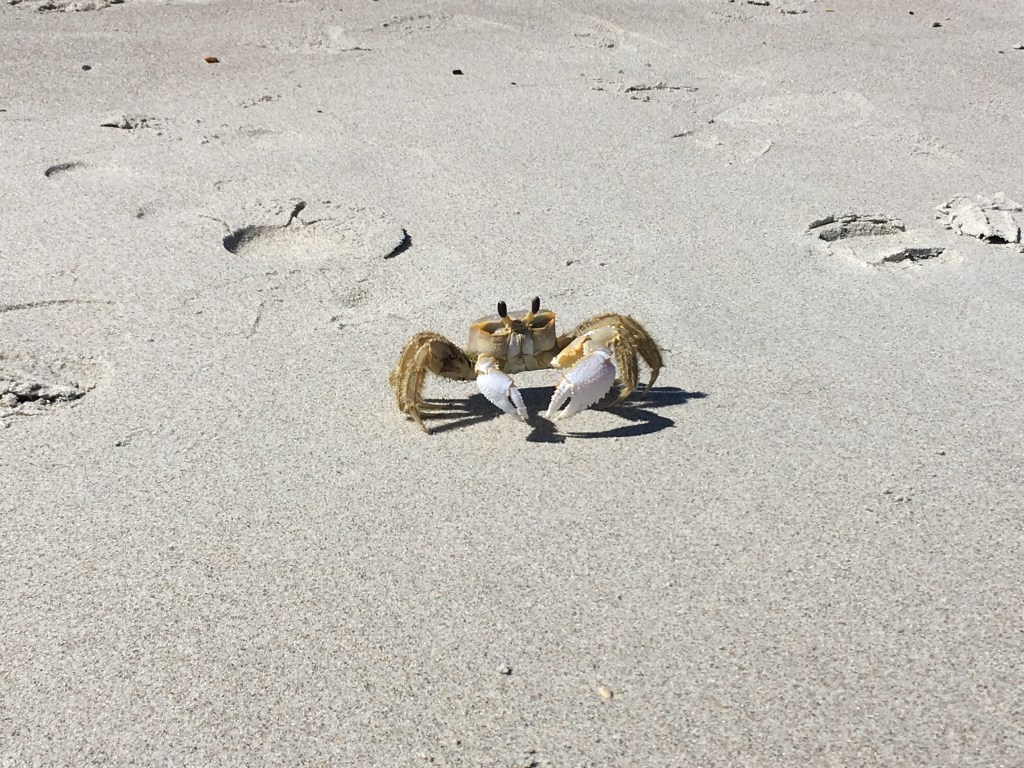
Let me introduce you to the ghost crab, one of my all-time favorite arthropods. These ghoulish crustaceans haunt the Atlantic coast and can be encountered nightly almost any time of the year. My brother and I always spend at least one night of our annual family vacation exploring the beach by flashlight to search for these summertime specters.
Most Atlantic beaches are haunted by ghost crabs, but your odds of encountering them increase on private or less-populated beaches – I have yet to walk down Garden City Beach at night without confronting at least one crab every five minutes. Half of the time they’ll sprint away the second the flashlight hits them. The other half of the time, if you move slowly enough, you can creep right up to the crab and watch it nibble its dinner or stare into its shiny brown eyes. Every now and then, though, you’ll get a rogue crab that sprints right at you, cackling and snapping its claws together as it chases you down the beach!
Just kidding, ghost crabs don’t cackle. And they last thing they want to do is chase you – they’d much rather sprint into the surf or back into their burrows at the sight of a giant wielding a blinding beam of light.
Despite the eerie name, ghost crabs really aren’t scary at all. They’re actually more yellowish than ghostly white, and they don’t only come out at night. In fact, the first time I ever saw a ghost crab was in the carport under our beach house in the early morning.
Another early memory I have of ghost crabs is when I was riding one of my cousin’s shoulders as a bunch of us ran screaming down the beach as we were pursued by a horde of angry crustaceans – that, or we thought we were being chased when our flashlight beams fell on a cluster of crabs right in front of us that started running away the same time we did. It was one of the above for sure.
Beside the nostalgic memories, one reason I love ghost crabs so much is that they look more like caricatures than real crabs, with their big stalk eyes and long legs that dwarf their bodies by comparison. The hilarious sight of a ghost crab running just adds to the effect – their legs move so fast it looks like their body is just flying down the beach with a little white skirt beneath it. The ghost crab subfamily is called Ocypodinae (“swift-footed”) for good reason.
While ghost crabs wouldn’t really be considered monsters by most people, they’re quite scary to a plethora of nonhuman beachgoers. Aside from plant material, these omnivorous crustaceans feast on mollusks, insects, and other shoreline animals. They even dine on baby sea turtles – not cool ghost crabs, not cool.
Of course, ghost crabs have reason to be cautious themselves when basking on the sand, as they’re prey to larger animals such as raccoons and shorebirds. Obviously preferring to flee rather than to fight, our ghoulish friends are much more likely to run or hide than try and take on a predator with their pincers. Even their mating rituals are relatively noncombative, as male competitions to impress females mostly just consist of the crabs sizing one another up and only coming to blows if the smaller crab doesn’t back down. This is all fine by me, because I’ve almost stepped on ghost crabs more times than I can count, and I’m really happy they’ve always decided to move out from under my foot rather than brace for it with claws outstretched.
Although they’re typically sand-dwelling crustaceans, ghost crabs actually breathe through their gills. Most of the time they can survive by using their hairy legs to flick moisture to their gills from the sand, but sometimes they have to run down to the surf from some additional oxygen. The only other instances when a ghost crab will go to the water are when it’s laying its eggs or running from people with flashlights.
Y’all remember the coronavirus? These guys would have been great at social-distancing.
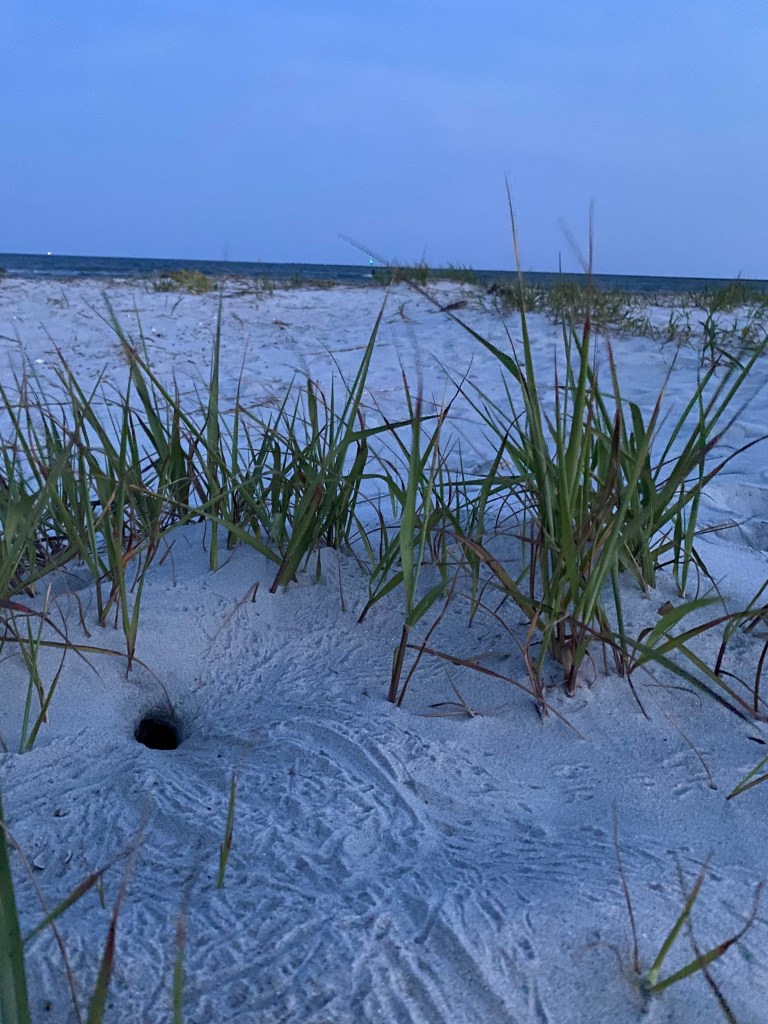
An easy way to tell how old a ghost crab is is to look at where its home is located: the older the crab, the further its burrow will be from the ocean. But whatever its proximity to the water, please don’t intentionally fill in a crab’s hole when you’re walking down the beach – especially during the winter. Most of the time, a crab relies on its burrow to avoid the sun and hide from predators, but when it gets cold out, ghost crabs actually hibernate. Although these burrows can be surprisingly deep, you still don’t want to risk the chance of dumping sand on a sleeping crab’s head.
Do crabs have heads? I guess their body and head are kind of the same thing… just don’t go around dumping sand on crabs, whatever their anatomical features are. It’s not nice.
If you’re feeling brave this Halloween season, grab some friends and trek down to the beach under the light of the full moon. Gather your courage and click on your flashlights – you may spot something eerie dashing across the sand. These arthropodan spooks mean you no harm and may allow you to get close enough for a crustacean selfie (if you’re more patient than I am) – but be warned, these skittish crabs may dart away at the slightest provocation and disappear into the midnight surf, never to be seen again!
Plus, while it’s not their first choice of action, they can still pinch you, too. It’s probably not the best idea to get all up in the personal space of a terror of the night, no matter how skittish and goofy it appears.
Happy Halloween everyone! May your night be filled with the creepiest of crawlies – most of whom aren’t very creepy at all.
 Home
Home 